
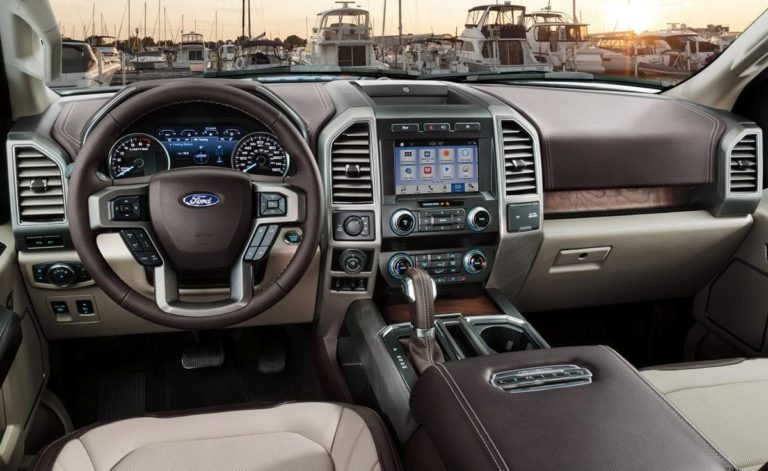
I have always loved numbers. As a child, I remember sitting in the middle seat of the car, next to the driver, and feeling the thrill of watching the numbers roll higher and higher on the digital speedometer as we accelerated. With this passion for numbers at a young age, it appeared that I was destined to become an accountant. But accounting and I got off to a bad start when I took an introductory course in high school and hated it. The teachers over emphasized normal account balances (debits vs. credits) and I didn’t grasp the “big picture” or usefulness of accounting. At that point, I vowed that I would never work in the accounting profession.
My attitude towards accounting began to change a few years later when I asked my dad’s boss, a successful executive, what I should study in college. He recommended accounting. He went on to say that I wouldn’t have to work in accounting for it to be useful in my career. After all, he graduated from college with an accounting degree and never worked an accounting job. However, the accounting concepts he learned in college have been instrumental to his success as an executive. He explained that accounting is the language of business. With this new perspective, I enrolled in an accounting class when I started college and eventually, selected it as my major. As my career has progressed and being a licensed CPA working in public accounting I have learned that accounting is the most crucial function of each and every business.
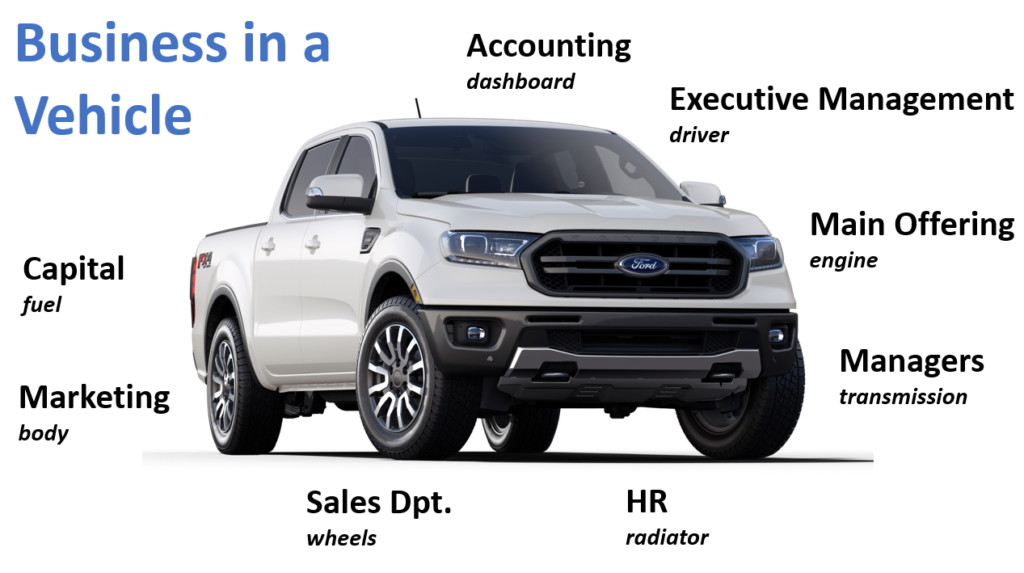
Businesses are similar to vehicles in that many different parts make up the whole. For a business, this includes manufacturing, marketing, sales, accounting, administration, HR, etc. For vehicles, this includes the engine, transmission, body, wheels, etc. In comparing a business to a vehicle, the body of the vehicle is the brand of your business and what consumers see (i.e. packaging, advertising, buildings, stores, etc.). The engine is the company’s main offering (products and services that people buy). The wheels are the Sales Department. While the heart of a vehicle is the engine without the wheels vehicles wouldn’t be able to serve their intended function (transportation). The same is true for businesses. Without a sales department, the solution your company has created wouldn’t get to the people who need it. The radiator is the HR department which keeps things cool within the organization. The transmission represents supervisors and managers who keep things running smoothly. The vehicle’s fuel is equivalent to capital (i.e. cash). Without it, the vehicle can’t operate. Just as putting a better grade of oil in your vehicle enhances its performance the better a business’ systems and processes are the better the company will perform. The vehicle’s driver is executive management. They determine where the business is going and how they’ll get there. And accounting is the vehicle’s dashboard.
Now you might not think the dashboard is your vehicle’s most important feature, but let me explain why it is. First, your dashboard will notify you if you forgot to fasten your seat belt. Seat belts are equivalent to internal controls. While both seat belts and internal controls are often perceived as an annoyance they are designed to protect. And when they are ignored the consequences can be deadly for the driver and the business (think Enron). The dashboard displays the fuel level just as accounting notifies management of the company’s level of available capital. The dashboard also tracks the vehicle’s fuel efficiency (mpg) while accounting notifies management of the Company’s cash burn rate. These both are important when planning and forecasting. The dashboard notifies the driver of how fast the vehicle is traveling and accounting notifies management how fast the company is growing (or shrinking). The dashboard notifies the driver how much stress the vehicle is experiencing with RPMs just as accounting notifies management how much stress the company is experiencing and if it is sustainable. The dashboard will warn a driver if it is snowing and accounting can warn about outside factors that can impact your business (economic, political, and regulatory environments). A dashboard will warn a driver if the car is losing traction while accounting can warn a business that its losing traction in its operations or in the market. Newer vehicles have dashboards that include features such as a backup camera, traffic navigation, parking assistance, seat warmers, and even a three-prong outlet. Just as features are improving in the automotive industry, accounting features are also improving. As technology progresses, executives and managers are benefiting from having real-time data to make wise decisions. A consultant shared with me that he uses financial data and metrics to identify areas businesses can improve. In his words, “the way I see it, there are hundreds of levers that my clients can pull that can have a significant impact on the bottom line. We identify and measure these levers through financial information.”
Accounting is the most important business function because it provides executive management with the information it needs to make the best decisions that will drive the company forward. Although the road has been bumpy at times, I’m glad that I chose accounting as my profession because I’m gaining the skills to understand and interpret financial decisions that will help drive and develop business.