

There’s been a lot written about the importance of Work-Life Balance but it doesn’t seem like there’s been much written on HOW to achieve it. My goal is to provide helpful, actionable ideas to help you find your personal work-life balance.
To begin to solve the Work-Life Balance conundrum we need to shift from thinking “balance” to something more simple.
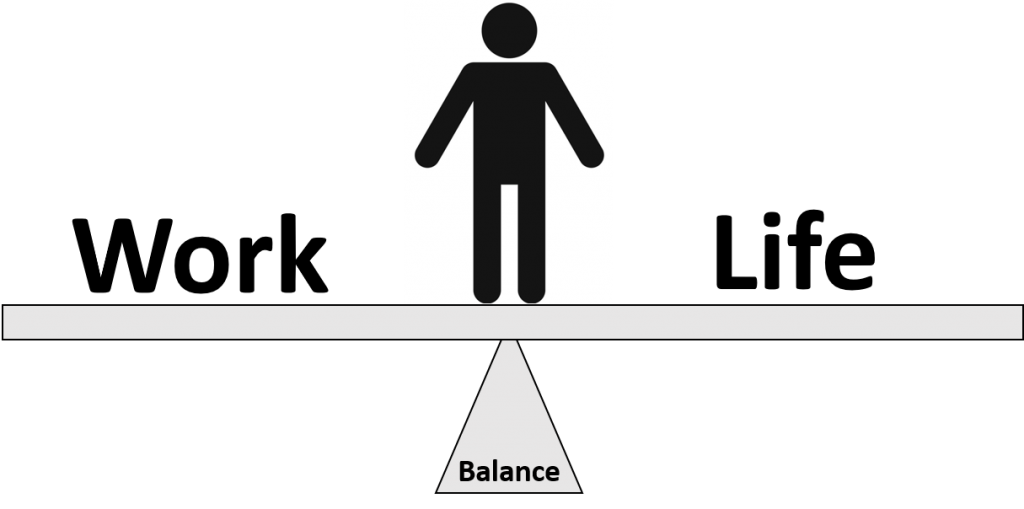

The theory of work-life balance sounds nice, but the ironic thing is focusing on balancing sets us up for failure. Unlike the picture above, life is not stationary but rather is in constant motion requiring continuous adjustments. Our brains are physiologically inept at multitasking. Earl Miller, a Picower professor of neuroscience at MIT says that for the most part humans can’t focus on more than one thing at a time. Instead, we’re “switching from task to task, you think you’re actually paying attention to everything around you at the same time. But you’re actually not… Think about writing an email and talking on the phone at the same time. Those things are nearly impossible to do at the same time. You cannot focus on one while doing the other. That’s because of what’s called interference between two tasks. They both involve communicating via speech or the written word, and so there’s a lot of conflict between the two of them.”
When we try to balance both work and life simultaneously, we’re focusing on both areas and, consequently, we cannot give 100% to either one. As a result, we are unable to give our best to either one and we stumble. A working mom that I spoke with put it this way: “Sometimes I feel like I’m trying to give so much to my work and my kids, but that I’m falling short at both.”

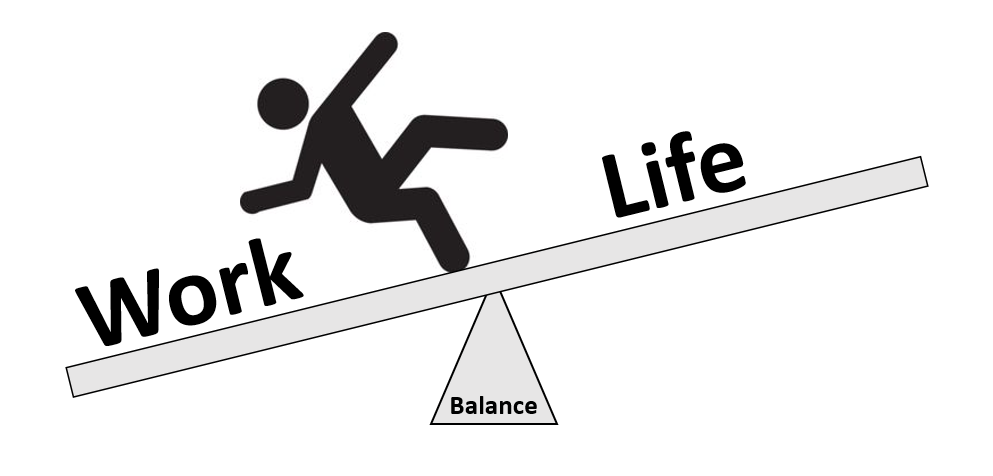
As I’ve approached this idea, I’ve found that the solution may not be to seek work-life balance (aka simultaneously integrating both work and life into most aspects of my day), but rather work-life switch.
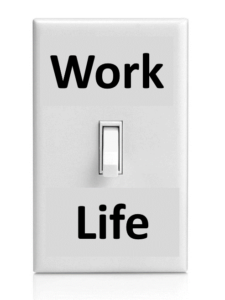
A light switch provides two possible choices: on or off, work-life switch provides two options: work or life. When a light switch is flipped in one direction or another, the result is the same, complete light or complete darkness. The same should be with our focus. We should be either entirely focused on work or completely removed. Professionals today feel an obligation of “always needing to be available.” I believe this is largely due to our emails being on our phones and the ability to work remotely. With the advancement of smartphones we have developed a habit of constantly checking our phones and our work emails. We’re afraid of falling behind so we essentially never unplug ourselves from work. I’m not suggesting that you shouldn’t be available but there are steps you can take to remain available without the burden of never mentally and emotionally fully stepping away from your work.
Here are a series of actions you can take to implement a Work-Life Switch.
- Analyze what Work and Life each mean to you
Begin by viewing your work and life from a 30,000 feet view. What do work and life each entail for you? What does success look like? Taking a moment to analyze what work and life mean to you will help you see the bigger picture and capture a better perspective between what you’re currently doing and what’s possible. For example, you could ask yourself: what are the current expectations for me at work? What do I hope to accomplish through my work? What roles do I have outside of work (mother, spouse, volunteer, etc.)? What does success look like in each of those roles? Also, don’t forget to identify things you need to do for yourself. For example, what do you like to do that helps you relieve stress and recover from the demands of work and life? This could be activities like vacationing, exercising, or spending time with loved ones. Just like the flight safety instructions of securing your own air mask before helping others, we need to make sure we take care of ourselves before we can most effectively take care of others.
2. Identify what’s important to you
As a professional you probably have less time than you wish you had. One way to save time is to identify which activities are important to you and which aren’t. For example, it might be important that you eat dinner with your family every night, but it’s not necessarily important that you cook the meal. It might be important that your kids wear clean clothes but not so important that you’re the one who does the laundry. It’s important that your yard looks good but it’s not important that you’re the one who mows it. There are many chores that you can outsource to others, whether that is to a spouse, to children, or to hired help, that will save you time. In both work and your personal life, outsource items that do not add value so that you can focus on the most important things.
3. Understand your rhythm of the day
There are a million things you need to do each day. Evaluate when you perform each task best. In his book, When: The Scientific Secrets of Perfect Timing, Daniel Pink explains that there is a “rhythm of the day” which for everyone includes a peak, a trough, and a rebound. The peak is when you have the most energy and best focus. The trough is the energetic low-point of the day and the rebound is when you start to catch your second burst of energy. People fall into one of two categories; owls or larks. Owls experience their peak in morning while Larks peak in the evening. Most people (approx. 3 out of 4 people) are Larks who have a tendency to wake up earlier and perform better in the mornings. They hit their low point in the early afternoon and then feel a boost of energy in the late afternoon to early evening. Larks on the other hand are the exact opposite. They tend to sleep in and don’t concentrate well in the mornings. The experience their peak in the evening and tend to stay up later. For example, I’m a Lark. I concentrate much better in the morning, so I try to do my creative and mentally demanding projects in the morning and leave more mundane projects for the afternoon (i.e. checking emails). Identifying when you perform each task best will help you prioritize and schedule out your day to align when you’ll do each task most successfully.
4. Set and manage expectations at both the office and at home
Once you’ve defined what success in work and life is for you, what are your most important priorities, and when you do each activity best, you can now communicate to those around you. For example, I let my teams know that when I go on vacation I will not be actively checking my emails; however, if I’m needed they can text me and I’ll make myself available. This allows me to unplug with the peace of mind of knowing that if something crazy at work happened I would be notified. In order for this to be effective your team needs to trust you enough to “bother” you if something important comes up.
5. Set goals and evaluate where you stand
Setting goals will help you understand where you stand and what you need to accomplish. As your career progresses there will be times when you focus more on one priority over another. By evaluating your goals and actions you’ll be mindful of what needs to be accomplished and whether you need to adjust your schedule, focus, or goals, or if you’re in a position where you can focus more on life outside of work. When setting goals be mindful of your long-term aspirations. If your daily actions and goals are not leading you towards living your long-term vision then evaluate and reconsider your goals. For more ideas on setting goals and actions that are aligned with your long-term aspirations read this article.
6. Plan; both daily and weekly
Planning is the most effective tool for finding balance. When we don’t plan and are “playing it by ear” we forget important items and waste time wondering what we should be doing or we’re not doing what’s most important. I believe planning starts at the end of the day. Before you finish working, write down the things that you need to accomplish the next day and when those need to be finished by. Then the next morning before you begin working review the plan you made at the end of yesterday and make any adjustments necessary. Do the same at the end of the week when you’re about to head out for the weekend. Identify what things you need to accomplish next week, when are their deadlines and when will you work on them. At the beginning of the week, review your plan and make any necessary adjustments. Planning will help you stay on top of your responsibilities so when you’re away from work you don’t have to worry if you’re missing anything.
7. Do the hardest task first each day
Tackle the bear, whatever task that scares you the most, at the beginning of each day. In the mornings we’re the most refreshed and able to focus (if you’re a lark anyway). Once the bear has been tamed you don’t have to worry about it the rest of the day. While if you put off the bear you’re going to be dreading it until you do it. Dreading and procrastinating an important task is very taxing and will leave you feeling more burned out. Tackle the bears in the morning and eat cupcakes (completing easier tasks) in the afternoon.
8. Purposefully put your phone away at home
When I get home after a long day of work I just want to rest and be on my phone to catch up on what’s happened that day. While I believe there’s some value to this, for example an episode of my favorite talk show helps me unwind, we need to limit our time on our phones. Find a balance between catching up with your interests on your phone and then purposefully being away from your phone. Through cable TV and now smartphones, our society has generally come to expect to be entertained all the time (I’m just as guilty of this as anyone). This need to be entertained puts us in a weak and passive state of mind where we don’t chose to participate in tasks unless they provide instant satisfaction. Purposefully putting our phones away for a time will help us connect with our families, friends, or take time for developing hobbies and skills. It will help us unplug from the world and focus on our surroundings.
9. Check emails only at certain times
Email is a constant distraction. Radicati, a technology market research firm, reported that the average office worker receives 121 email per day. That’s an email about every 5 minutes. For most people, every email received is accompanied by a notification that shoots across our screen and disrupts our focus from the task at hand. Instead, close your email and only check it at certain times. This will help you be in control of your inbox. I’ve started checking my emails only at the following times each day; 1) when I wake up and before I exercise. This allows me to get a heads up if there’s a bear that I’ll need to tackle and how I want to approach it that day. 2) I check my emails at the following times during the work day: 10 am, 1 pm, and 4 pm. The rest of the day it’s closed. After I finish working for the day I don’t check my emails until the next morning, which allows me ample time to unplug from work.
One cool trick I recently learned is sending delayed emails. Emails are not chats and don’t need to be responded to immediately. If you draft an email but don’t want to send an immediate response, utilize the delayed feature for when the email will send. If you use Outlook go to email –> options –> delay delivery –> select a time. You’ll be amazed at how much work you can get done without being distracted.
These nine actions are things you can do to achieve a work-life switch. Summarized list:
- Analyze what work and life each mean to you
- Identify what’s important to you
- Understand your rhythm of the day
- Set and manage expectations at both the office and at home
- Set goals and evaluate where you stand
- Plan; both daily and weekly
- Do the hardest task first each day
- Purposefully put your phone away at home
- Check emails only at certain times
While professionals struggle with balancing priorities between work and their personal lives (just like the working mom mentioned earlier), a work-life switch mindset will help you be more present and effective in each endeavor. These steps will help you prioritize and find greater satisfaction both at work and home.